

Ten years after launch and 50 million copies sold, Stardew Valley’s sustained commercial success offers game developers a proven blueprint for building projects with decade-long retention. Created by solo developer Eric Barone, the game demonstrates how focused design principles, authentic creative vision, and consistent post-launch support can outperform AAA budgets and massive teams. The 2026 anniversary milestone arrives alongside cultural expansion beyond gaming, including the Festival of Seasons concert series touring venues like Montréal’s Cinquième Salle, proving the franchise now commands cross-media engagement typically reserved for industry giants.
For developers working on mid-core multiplayer titles in Unity, the lessons extend beyond nostalgia-driven farming sims. Stardew Valley’s architecture reveals specific technical and design choices that translate directly to modern development challenges: modular content systems that enable years of updates without engine rewrites, player agency frameworks that drive organic replayability, and community-first development that transforms players into advocates. The game’s trajectory from $15 indie release to 50-million-seller without predatory monetization demonstrates viable alternatives to free-to-play models, particularly relevant as player fatigue with gacha mechanics and battle passes intensifies across Western markets. This analysis extracts the concrete development strategies behind that achievement and their application to contemporary projects.
The Stardew Valley Phenomenon: By the Numbers
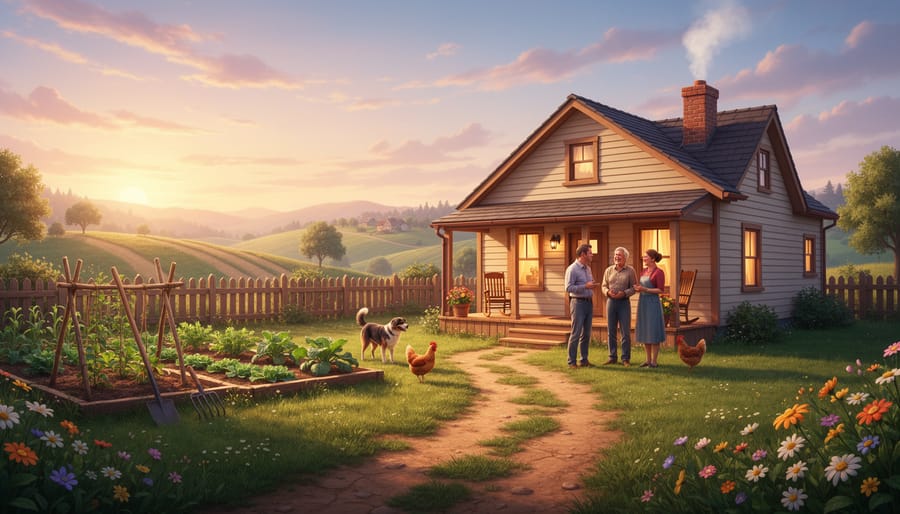
When Eric Barone released Stardew Valley on February 26, 2016, after four years of solo development, few could have predicted its trajectory. By its 10-year anniversary in February 2026, the game had sold over 50 million copies across multiple platforms, a commercial achievement that rivals major studio releases with budgets hundreds of times larger. This milestone positions Stardew Valley among the best-selling video games of all time, a remarkable feat for a title built entirely by one person using self-taught programming skills.
The game’s cultural footprint extends beyond sales figures. Stardew Valley has maintained an active player base and community a decade after launch, spawning extensive modding ecosystems, dedicated fan communities, and cultural events that transcend the digital space. The Festival of Seasons concert series exemplifies this cultural resonance, an intimate, immersive musical experience that brought the game’s soundtrack to live audiences in Montreal and Toronto in January 2026, with performances at Cinquième Salle.
For developers analyzing successful game design, these numbers represent more than commercial victory. They demonstrate how focused vision, responsive development, and genuine player engagement can create lasting value. A solo developer competing against billion-dollar franchises achieved not just financial success but cultural permanence, offering tangible proof that execution and player connection often matter more than budget size or team scale.
Core Development Principles Behind the Success
Player-Centric Design and Iteration

Stardew Valley’s creator, Eric Barone, transformed player feedback into a development philosophy that has sustained the game for a decade. Rather than abandoning the project after the 2016 launch, Barone continued releasing substantial updates, adding multiplayer in 2018, new content in 2020, and further expansions in subsequent years. This commitment to iteration mirrors the core principles of adaptive planning, where development roadmaps evolve based on player needs rather than rigid pre-launch schedules.
The game’s patch history reveals a pattern: features players requested most frequently, such as cross-platform multiplayer, quality-of-life improvements, and new romance options, appeared in later updates. Barone monitored community forums, Reddit discussions, and direct feedback to identify pain points and opportunities. This approach demonstrates that player-centric development extends beyond initial design into long-term support, treating launch as a milestone rather than a finish line.
For modern developers working on mid-core multiplayer projects, this lesson proves especially relevant. Building feedback loops into your development pipeline, through analytics, community channels, and beta testing, enables you to refine mechanics that drive retention. The key is balancing your original vision with player insights, using iteration to strengthen core systems rather than chasing every feature request. Stardwell Valley’s sustained success shows that continuous improvement, grounded in genuine player understanding, builds loyalty that transcends initial sales figures.
Accessible Complexity: Balancing Depth and Approachability
Stardew Valley’s greatest design achievement isn’t its individual systems, it’s how they interlock without overwhelming new players. The game introduces farming, relationship-building, combat, crafting, fishing, and seasonal events in layers that reveal complexity gradually. A new player can spend their first week just watering crops and talking to villagers, then naturally discover the mines, then unlock cooking recipes from foraged ingredients, each system building on previous knowledge rather than dumping everything at once.
This layered approachable complexity directly applies to mid-core multiplayer development. The key is designing systems that function independently at basic levels but reward players who engage with their interconnections. Stardew’s relationship system works fine if you just talk to NPCs occasionally, but yields substantial rewards when players learn gift preferences and attend seasonal festivals. Combat works with basic sword-swinging, yet supports complex equipment optimization and food buffs for dedicated players.
For developers building mid-core experiences, the lesson is clear: create multiple valid engagement depths for the same features. Design your core loop to be immediately comprehensible but introduce advanced mechanics through optional experimentation rather than mandatory tutorials. Let players feel competent quickly, then let curiosity drive deeper mastery. This preserves accessibility while satisfying players who crave strategic depth.
Community-Driven Longevity

Stardew Valley’s decade-long relevance stems directly from its embrace of community participation rather than passive consumption. Creator Eric Barone designed the game with openness in mind, providing modding tools and an accessible file structure that enabled thousands of community-created modifications. This decision transformed players into collaborators who extended the game’s content far beyond what a solo developer could produce, creating everything from quality-of-life improvements to complete gameplay overhauls that kept the experience fresh for returning players.
The 2018 addition of multiplayer functionality marked another pivotal moment, converting what had been a solitary farming experience into a shared social space. Co-op play introduced new dynamics, collaborative farm management, and reasons for friends to return together, significantly extending player engagement beyond individual playthroughs. This wasn’t merely a feature addition but a fundamental shift in how players experienced and discussed the game, fueling ongoing interest through social connection.
For developers building multiplayer ecosystems, Stardew Valley demonstrates that community longevity requires deliberate infrastructure:
- Provide robust modding support with accessible tools and clear documentation
- Design multiplayer systems that enable meaningful collaboration, not just parallel play
- Maintain a cadence of substantive content updates that show continued investment
- Establish transparent, responsive communication channels with your player base
The ongoing Festival of Seasons concert series in early 2026 illustrates how vibrant communities can extend a game’s cultural footprint into physical spaces, creating opportunities for player connection beyond the game itself. The lesson here isn’t to replicate Barone’s specific choices but to recognize that sustained success requires treating your community as partners in the game’s evolution. Build systems that empower players to create, collaborate, and shape the experience, then support those systems consistently. Games with staying power don’t just entertain; they provide frameworks for ongoing creativity and social connection.
Technical Foundations for Long-Term Support
Stardew Valley’s architecture demonstrates how technical foundations shape a game’s capacity for evolution. Built on a custom C# engine with MonoGame framework, the game prioritized platform-agnostic code from the start, which later enabled seamless deployment across PC, console, and mobile platforms. The modular structure separated core systems from content, allowing updates to farming mechanics, relationship systems, or multiplayer features without destabilizing the codebase.
For Unity developers working on mid-core multiplayer projects, this modularity translates directly to component-based architecture and strict separation between gameplay logic and platform-specific implementations. Stardew Valley’s support for community modifications stemmed from exposing well-documented APIs and maintaining backward compatibility across updates, demonstrating that extensibility requires deliberate design choices rather than post-launch retrofitting. The lesson is straightforward: technical decisions made during initial architecture define whether a game can sustain ten years of updates or requires costly rewrites to add features players expect.
Applying Stardew Valley’s Lessons to Modern Game Development
Iterative Development and Post-Launch Support
Stardew Valley’s decade of continuous updates shows how iterative development sustains player engagement long after launch. Eric Barone released major content expansions in 2016, 2018, 2020, and 2023, each addressing community requests and refining gameplay systems. This approach transformed a finite indie game into an evolving platform, demonstrating that structured post-launch roadmaps drive retention and word-of-mouth growth.
For developers building mid-core multiplayer projects, this translates into planning update cycles before launch. Establish player feedback loops through in-game telemetry, community forums, and direct communication channels. Prioritize fixes that remove friction points first, then layer new content that builds on proven mechanics rather than introducing wholesale changes.
Agile sprints work well here. Schedule bi-weekly deployments for bug fixes and balance adjustments, with quarterly content drops that deliver new features based on aggregated player data. Document feature requests in a public roadmap to set expectations and build trust. This cadence mirrors Stardew Valley’s rhythm of small tweaks between substantial updates, keeping communities engaged without overwhelming development resources or fragmenting the player base across incompatible versions.
Building for Community Engagement
Stardew Valley’s multiplayer mode, added two years post-launch, transformed a single-player farming sim into a shared social space where friends built farms together, traded resources, and coordinated seasonal festivals. This evolution demonstrates a crucial lesson for developers: community-driven features don’t just extend playtime, they create organic content generation that sustains interest far beyond what any development team could produce alone. For mid-core multiplayer projects, the technical and design choices that enable community participation must be baked into the architecture from day one, not retrofitted as an afterthought.
The game’s robust modding ecosystem illustrates how lowering barriers to community creativity pays dividends. By exposing key systems through accessible formats and maintaining backward compatibility across updates, ConcernedApe enabled thousands of player-created modifications, from quality-of-life tweaks to total conversion mods, that kept the experience fresh for existing players and attracted new audiences. Unity developers can apply this principle by structuring game logic in modular, extensible ways and providing clear documentation for community creators.
Practical steps for building community-focused infrastructure include:
- Design data structures and game systems with modding support in mind from initial architecture
- Plan server infrastructure that scales gracefully as player counts grow organically
- Create content hooks, seasonal events, customizable spaces, shareable achievements, that invite player creativity
- Establish direct communication channels between development and community before launch, not after problems emerge
The multiplayer framework itself should prioritize asynchronous collaboration over purely competitive mechanics for games targeting sustained engagement. Stardew Valley’s cooperative farm management, where players contribute to shared goals without zero-sum competition, fostered collaborative communities rather than toxic environments. This design choice aligns perfectly with building games that communities want to inhabit long-term, where player-generated stories and relationships become the content that drives retention.
Cross-Platform Considerations for Longevity
Stardew Valley’s deployment across PC, consoles, and mobile platforms played a crucial role in reaching 50 million players over ten years. Each platform required distinct technical adaptations, from mouse-and-keyboard precision on PC to touch controls on mobile and controller mapping for consoles, but the core experience remained consistent. This accessibility strategy ensured no audience segment was excluded due to hardware preferences.
For developers working on multiplayer titles, cross-platform support demands architectural planning from day one. Unity’s cross-platform capabilities simplify asset pipelines and code portability, but controller input handling, UI scaling, and performance optimization must be tailored to each target. Mobile deployments, for instance, require aggressive optimization and alternative control schemes that don’t compromise gameplay depth.
Platform certification processes vary significantly. Console platforms enforce strict technical requirements and approval timelines that impact update cadences, while PC and mobile stores offer more flexibility. Developers should factor these constraints into post-launch roadmaps, particularly when planning synchronized content updates across platforms.
The business case extends beyond initial sales. A game available on multiple platforms maintains visibility across storefronts, capitalizes on platform-specific marketing events, and captures players who transition between devices. This sustained presence directly supports long-term revenue and community growth.
Cultural Impact: From Game to Experience
Stardew Valley’s evolution into a broader cultural phenomenon illustrates how deeply resonant game design can transcend its original medium. The game’s aesthetic and emotional resonance have inspired merchandise, fan art, and community gatherings worldwide, but the recent expansion into live performance represents a new dimension of franchise development.
The Festival of Seasons concert series marks a significant milestone in this cultural expansion. These intimate, immersive performances translate the game’s beloved soundtrack into live orchestral experiences, with January 2026 concert dates bringing the music to audiences in Montreal and Toronto at Cinquième Salle. The concerts demonstrate how a game’s audio-visual identity can support standalone cultural products that deepen fan engagement without requiring direct interaction with the original software.
For developers considering long-term franchise potential, this expansion offers a practical blueprint. Games with distinctive artistic identities and emotionally invested communities create opportunities beyond digital distribution. The key lies in identifying which elements resonate most powerfully with players, whether music, visual design, narrative themes, or emotional tone, and translating those elements into experiences that honor the source material while standing independently.
This cultural reach amplifies a game’s commercial longevity and brand value, creating multiple revenue streams and touchpoints with audiences who may never have played the original title.
Common Questions About Stardew Valley’s Development Success
What Developers Can Learn from Stardew Valley’s Development Success
Developers examining Stardew Valley’s trajectory often ask similar questions about replicating its success in different contexts. The game’s journey from solo project to 50-million-copy phenomenon raises practical concerns about scalability, technical decisions, and community dynamics that apply across development scales.
Can solo developers still achieve this level of success in 2026?
While solo success stories remain possible, Stardew Valley’s creation predates today’s saturated market. Modern developers benefit from better tools and distribution platforms, but face significantly higher competition and player expectations for polish and content volume at launch.
What role did the engine choice play in the game’s longevity?
Stardew Valley used XNA (later migrated to FNA and MonoGame), which enabled cross-platform deployment and community modding. The engine mattered less than the architecture decisions that supported ongoing updates and platform expansion, principles that apply whether you’re working in Unity, Unreal, or custom engines.
How important was multiplayer to the game’s sustained popularity?
Multiplayer arrived two years post-launch but significantly extended the game’s lifecycle by creating new social dynamics and shared experiences. It demonstrates that core single-player design can come first, with collaborative features added when they genuinely enhance the experience rather than as a launch checkbox.
How do these lessons apply to mid-core multiplayer projects?
The core principles, iterative improvement, accessible depth, community support, translate directly to mid-core development. The difference lies in execution: multiplayer-first projects need robust social infrastructure from day one, but the same commitment to player feedback and continuous refinement drives retention across genres.
The common thread across these questions centers on adaptability. Stardew Valley succeeded because it evolved with its community while maintaining a clear creative vision, a balance that works regardless of team size or genre focus.
Stardew Valley’s trajectory from solo indie project to 50 million copies sold over a decade proves that enduring success stems from commitment to players, not shortcuts. The game’s February 2026 anniversary marks more than a milestone, it validates a development philosophy built on iteration, accessible complexity, and genuine community engagement. These aren’t abstract ideals; they’re operational principles that work at any scale.
For developers building mid-core multiplayer experiences today, the lessons are clear. Player-centric design means listening and adapting long after launch. Technical excellence creates the foundation for that adaptability, whether you’re working in Unity or another engine, architect for evolution, not just shipping. Community collaboration isn’t a marketing strategy; it’s designing systems that invite players to invest, share, and return.
Stardew Valley’s success doesn’t demand you replicate its mechanics or scope. It challenges you to match its discipline: ship thoughtfully, improve relentlessly, and build something players want to be part of for years. The games that last are the ones that respect their audience enough to grow alongside them.