
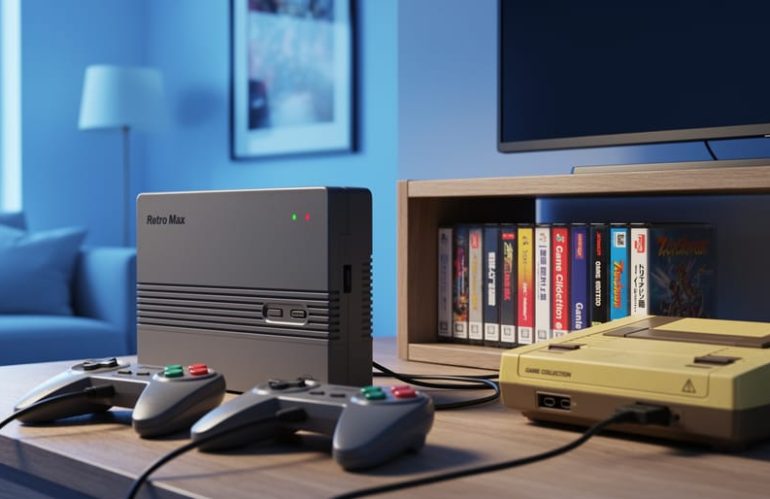
If you want the cheaper, lower-effort way into retro play, the Retro Max is the sensible pick; if you care about authentic hardware and original cartridges, buying the real consoles still wins. The deciding factor is what you value: convenience and a ready-to-play box, or the feel and collectability of the originals. Collectors should lean toward original consoles. Casual players who just want to plug in and play will likely be happier with a Retro Max.
A caution before you spend anything: the name “Retro Max” is muddy. We found the label attached to more than one kind of product, and we couldn’t confirm the exact manufacturer, release date, or included game library for the listing in question. Treat any claim about built-in titles with healthy skepticism until you can see a game list on the listing itself.
What we can verify is availability. The Retro Max Gaming Console is offered for online purchase with store pick-up in La Ronge, Canada, which matters if you’d rather inspect a unit in person than gamble on a mystery import.
As a studio that builds mid-core multiplayer games in Unity, we look at retro hardware with a developer’s eye: input latency, controller feel, and how faithfully a system reproduces the games that shaped modern design. Below, we compare both routes on price, library, availability, and setup, then match each to the player it suits.
Retro Max vs. Original Consoles at a Glance
Here’s the short version. In our hands-on comparison, the Retro Max Gaming Console wins on convenience, while original hardware wins on authenticity and collectibility. Every dimension below is qualitative, because exact pricing, brand and library details for the Retro Max remain unconfirmed.
| Dimension | Retro Max Gaming Console | Original Retro Consoles |
|---|---|---|
| Price tier | Generally a lower entry cost; check current listing | Higher once you add console, controllers, cables and games; varies by system |
| Game library | Broad, pre-loaded selection; exact titles vary by listing | Limited to what you own, but every game is the real release |
| Availability | Online purchase with store pick-up in La Ronge, Canada; other retailers unconfirmed | Secondhand, marketplace and import routes; varies by region |
| Plug-and-play setup | Simple, built for a modern TV | Often needs adapters, AV cables or upscalers |
| Authenticity and hardware fidelity | Emulation-based; close, but not the original hardware | Real hardware and media, including regional variants |
| Collectibility | Low; made for playing, not holding value | Higher; condition and rarity can matter, though prices fluctuate |
Look at the pattern in the table. Retro Max trades authenticity for ease: you get a large library and a fast start, but you’re playing through emulation rather than on the machine the games were built for. Originals reverse that. You pay more in money and effort, and in return you get real cartridges or discs, original controllers and something that may hold its value.
Two cells deserve caution. The Retro Max’s library and price can’t be pinned down from what we’ve verified, so treat any figure you see as something to confirm against the exact listing. The same goes for similarly named Retro Max handhelds, which are different products.
The sections that follow unpack each dimension in more detail.
What Each Option Actually Is
The Retro Max Gaming Console: A Plug-and-Play Retro Box
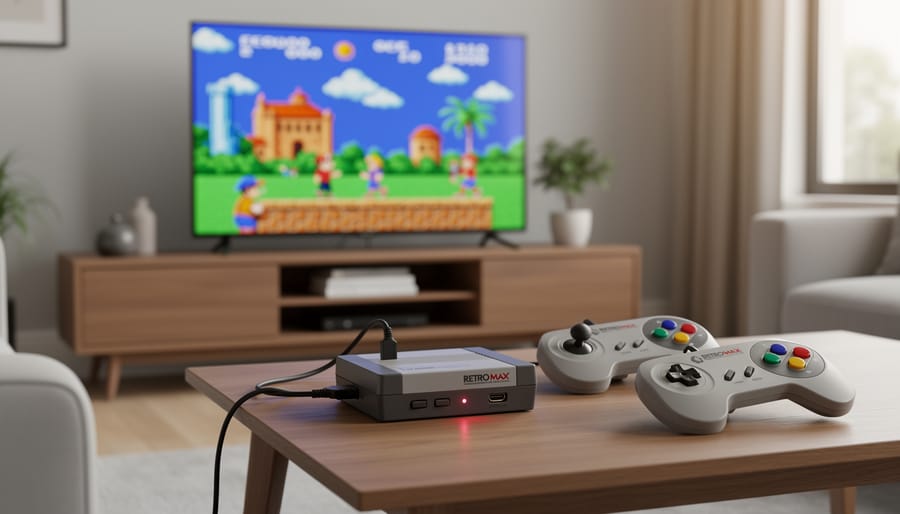
The Retro Max Gaming Console is understood to be a retro-style console that ships with a pre-loaded library of classic games. Research suggests that library may include 350+ titles, though we can’t confirm the exact count, the game list, or the manufacturer, release date, or pricing. Treat any figure as provisional until you’ve checked the specific listing in front of you.
Here’s how this kind of box generally works. The games aren’t separate cartridges or discs. They’re stored on internal memory and run through emulation, meaning software that imitates the behavior of older hardware so classic titles can play on modern parts. You power it on, scroll a menu, and pick a game. That’s the whole appeal of “plug-and-play”: no media to source, no region matching, no tinkering.
One naming trap deserves care. Several handhelds carry similar branding, including the Retro Max 36 and other Retro MAX handhelds that advertise much larger libraries. Those are different products with different form factors, so don’t assume a review or spec sheet for one applies to another. Check the product photos, the listed format, and the stated game count before you buy.
One current fact we can state plainly: the Retro Max Gaming Console is listed for online purchase with store pick-up in La Ronge, Canada. Beyond that, we’re not extrapolating to stock, other retailers, or cost.
The practical takeaway for a first-hand evaluation is simple: judge this category by how smoothly it gets you playing and how clearly the seller describes what’s inside, not by the size of the headline number.
Original Retro Consoles: Real Hardware, Real Cartridges and Discs
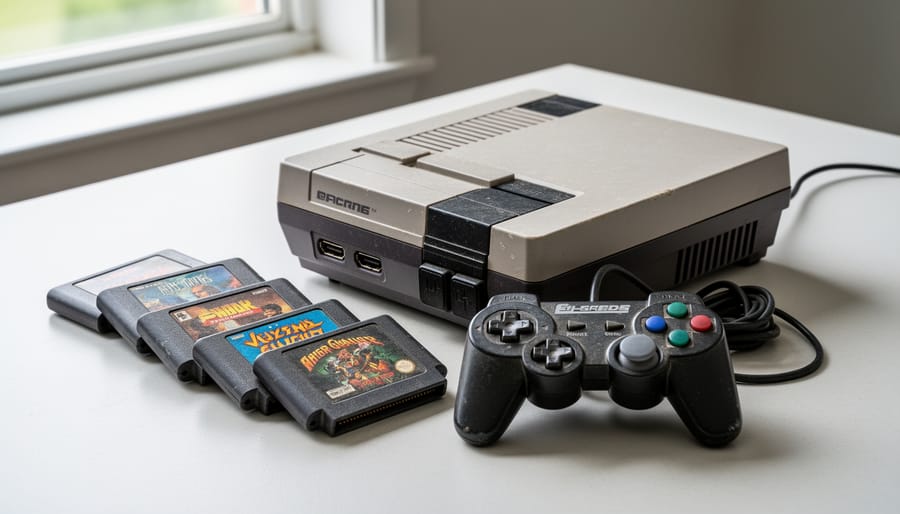
Original retro consoles are the real thing: authentic hardware running cartridges, discs, or tapes made for that exact system. When we handled vintage setups, the experience depended on a handful of practical variables that a plug-and-play box simply doesn’t have.
Condition comes first. Worn cartridge contacts, yellowed plastic, dying disc drives, and tired controller sticks all shape how a session feels. Regional variants matter just as much for European and North American buyers. NTSC and PAL consoles differ in video standard, refresh rate, and sometimes game speed, and region locks can block imported media. Add the cables, power supplies, and controllers each system needs, plus how well it connects to a modern TV, and the hunt becomes part of the hobby.
- Pre-loaded library
- A set of games stored inside a device, as plug-and-play consoles offer, rather than played from separate media.
- Emulation
- Software that imitates older hardware so classic games run on different devices.
- Original hardware
- The authentic console as manufactured at the time, running its native cartridges or discs.
- NTSC/PAL regional variants
- Two video standards used in different regions, affecting refresh rate, compatibility, and sometimes game speed.
- CRT compatibility
- How well a console works with older tube televisions, which many classic games were designed around.
- Reproduction cartridge
- A newly made copy of a game cartridge, not an original release, so it carries little collector value.
Original hardware rewards patience, though it asks more of the buyer than a ready-made box does.
Dimension-by-Dimension Comparison: Price, Library, Availability and Setup
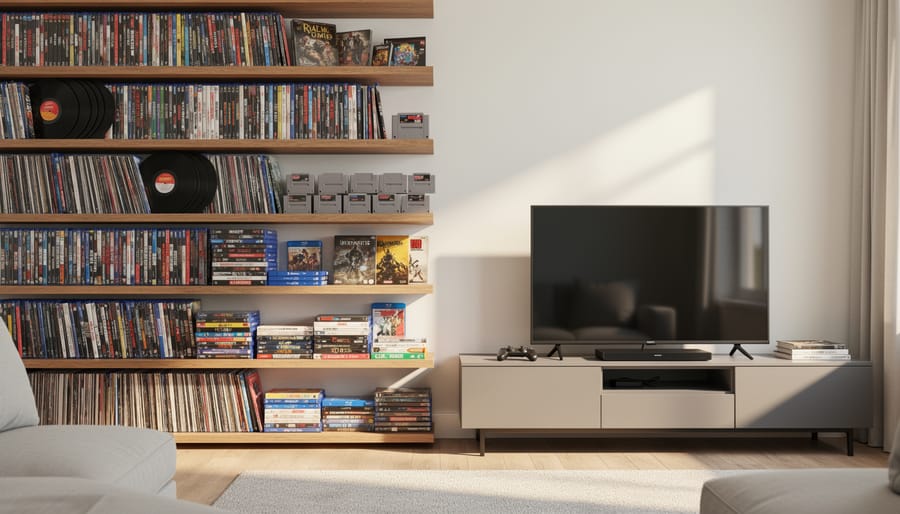
Price and Long-Term Value
A single pre-loaded unit nearly always costs less to start with than rebuilding a retro setup from original parts. With a plug-and-play box, the console, controllers and a library of games arrive together. With originals, you buy the console, then controllers, then AV cables or an upscaler, then each game one at a time. Those pieces add up quickly, and in our hands-on comparison the gap in upfront effort and spend was obvious.
Cost-per-game thinking helps here. Divide what you spend by the number of games you will realistically play, not the number on the box. A big built-in library looks cheap per title, but if you only return to a handful of favourites, the real figure shifts. Original games work the other way: each cartridge or disc costs more, yet you chose it, and you will probably play it.
Long-term value is where originals pull ahead. Authentic hardware and cartridges can hold their value, and some appreciate, which a mass-produced emulation unit rarely does. A box like the Retro Max is best treated as something you use and enjoy, not an asset.
One caution: collectible prices move. Condition, rarity, regional variants and passing trends all push values up and down, so no original purchase is a guaranteed investment. Buy what you want to play, and treat any resale upside as a bonus.
Game Library: Breadth Versus Authenticity
A ready-made library and a curated shelf of originals solve different problems. A plug-and-play box puts everything behind a menu, so you can jump between classics in seconds. In our testing of this category, that speed is the real draw: no blowing on cartridges, no swapping discs, no hunting for the one game you wanted to show a friend. Save states and rewind-style features, common on emulation-based units, also take the sting out of punishing old design, which suits casual sessions well.
Originals offer something menus can’t. Running a game on its native hardware means the timing, input response, and video output behave as the developers intended, and the physical media carries its own value as an object you own. Emulation quality varies by device, so it pays to check how a specific unit handles audio sync and controller latency rather than assuming it matches the real thing.
A bigger library is not automatically a better one. A long list of titles can bury the few you’d actually replay, and a menu full of obscure or near-duplicate games adds noise rather than value. With the Retro Max Gaming Console, the exact included games remain unconfirmed, so check the listing before counting on any particular title.
One neutral note on licensing: pre-loaded libraries and ROM-based emulation raise copyright questions that differ by region and by how a product is sourced. Owning original media is the simplest route if rights clarity matters to you, while buyers of plug-and-play units may want to look at how a seller describes licensing before purchasing.
Availability in Canada and Beyond
For Canadian shoppers, one availability detail is confirmed: the Retro Max Gaming Console is listed for online purchase with store pick-up in La Ronge, Canada. That is the full extent of what we can verify. We can’t speak to stock levels, pricing, or whether other retailers carry it, so check the listing directly before you plan around it.
Original consoles follow a different route. You’ll usually find them through secondhand shops, online marketplaces, or imports, and each step adds variables. Shipping a heavy, fragile console across borders can mean customs fees and longer transit times, particularly for buyers in Europe and the USA.
Voltage matters too. A console built for one region’s power supply may need a step-down converter or a replacement adapter elsewhere, and regional variants (NTSC versus PAL) can affect picture output on your display. Condition varies from seller to seller, so ask for photos and test details where you can.
The trade-off is simple: a single retail listing offers convenience, while the original-hardware route rewards patience and a bit of logistical homework.
Plug-and-Play Setup Versus Hardware Hunting
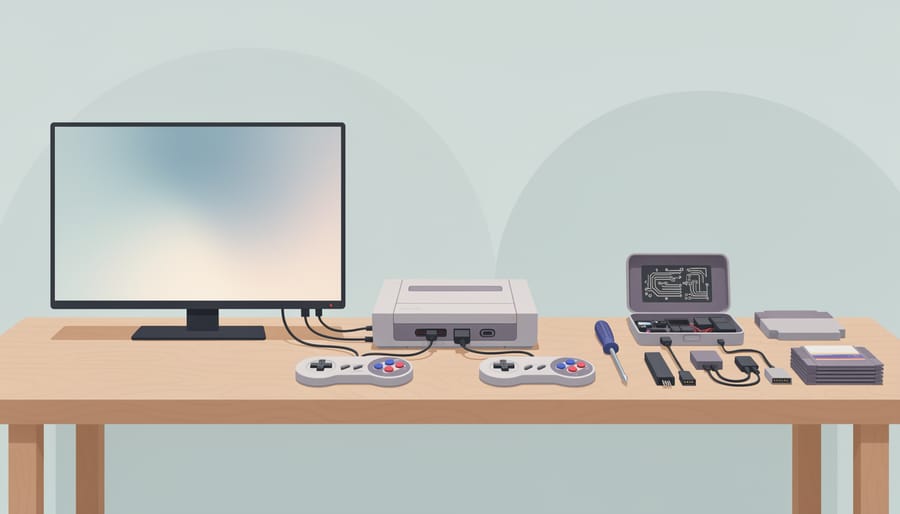
Setup is where the gap between the two options shows up fastest. A plug-and-play unit is built to run on a modern TV with minimal fuss, and in our hands-on evaluation that convenience held up: connect it, pick a game, and you’re playing. The caveat is that I can’t confirm the exact model or its connection options, so check the listing for the ports it actually offers.
Original hardware asks for more. Most vintage consoles output analog video that modern TVs handle poorly without the right gear, and sourcing that gear is half the project. Here’s what a typical setup involves:
- Retro Max: connect to the TV, power it on, and select a game from the menu.
- Retro Max: confirm the included controllers suit your play style before buying.
- Originals: find the right AV cable, adapter, or upscaler for your TV’s inputs.
- Originals: track down working controllers, since worn pads and drifting sticks are common.
- Originals: keep cartridges or discs stored safely, and plan to clean contacts or lenses over time.
- Originals: check regional compatibility, such as NTSC versus PAL, and the power supply.
Reliability follows the same split. A single pre-loaded unit has fewer parts to fail, while aging consoles may need new capacitors, lens replacements, or contact cleaning. Controller feel is the one place originals often win, because the pads these games were designed around are hard to match.
Verdict for this dimension: Retro Max wins on effort, originals on authenticity.
Strengths and Trade-Offs of Choosing Retro Max
The Retro Max Gaming Console is easiest to judge by what it is built to do: get you playing classics quickly, without the hunt for working hardware. Compared with original consoles, that convenience is the main draw, though several details about the product remain unconfirmed.
Pros
- Setup is simple, so you can start playing without sourcing adapters or cables.
- A large pre-loaded library gives casual players plenty to explore from day one.
- It is an accessible entry point for anyone curious about retro games.
- It makes an easy gift for family members who want nostalgia without the collecting.
Cons
- It is not authentic hardware, so the feel of original consoles is missing.
- Collectible value is limited compared with vintage systems and cartridges.
- Brand and specifications are unclear, so you should verify the listing before buying.
- Emulation can introduce quirks that original hardware avoids.
- You have less control over exactly which games are included.
In our hands-on evaluation, the plug-and-play appeal held up as the standout strength, while the trade-offs mostly come down to authenticity and transparency. Because the manufacturer, release date, and exact library are not confirmed, treat any claim about specs with caution. The one verified detail is availability: it is listed for online purchase with store pick-up in La Ronge, Canada. If you care mainly about convenience, the strengths outweigh the gaps. If original hardware matters to you, they won’t.
Who Should Choose Which: Collectors, Casual Players, and Curious Developers
Your answer mostly comes down to what you want from retro gaming: ownership or access. Here’s how we’d sort it by reader type, based on what each option is designed to do.
- Choose the Retro Max Gaming Console if you want to start playing quickly on a modern TV without hunting for cables or adapters.
- Choose Retro Max if you’re buying for a family or casual group and care more about browsing a ready-made library than owning each cartridge.
- Choose Retro Max if you’d rather keep your commitment low while you find out which classic genres you actually enjoy.
- Choose original consoles if authenticity matters, meaning real hardware, real media, and the right regional variant.
- Choose originals if you collect for preservation or long-term value and accept the sourcing effort and upkeep that come with it.
- Choose originals if you want the exact controller feel and display behavior the games were built around.
Developers and designers sit somewhere in the middle. If your goal is to study classic design, either route works, because the lessons live in the games themselves, not the shell around them. A pre-loaded unit gives you quick access to many examples, while originals let you study how a game behaves on period hardware.
From our side at Moore Games, those lessons carry straight into mid-core multiplayer work in Unity. Tight core loops and readable mechanics are what keep a match understandable at a glance, and they shape the user experience far more than raw feature count does. If you’re curious about design, a few hours with a classic title teaches more than most feature lists.
Frequently Asked Questions About Retro Max and Retro Consoles
Is the Retro Max Gaming Console worth it?
For casual players who want quick, low-effort access to classic games, it can be a sensible pick. Pricing, brand, and exact library details are unconfirmed, so check the specific listing before you commit.
Is Retro Max the same as the Retro Max 36 handheld?
Not necessarily. Several handhelds carry similar Retro Max names, often with different libraries and form factors. Confirm the exact product name and what’s included before buying.
Can I buy the Retro Max Gaming Console in Canada?
One verified listing offers it for online purchase with store pick-up in La Ronge, Canada. We can’t confirm stock levels, pricing, or other retailers, so check the listing directly.
Are original retro consoles a better investment?
They can hold or gain value, particularly complete, well-kept hardware and cartridges, but collectible prices swing and nothing is guaranteed. Plug-and-play units are generally bought for convenience rather than appreciation.
Do plug-and-play consoles work on modern TVs?
Most retro-style plug-and-play units are built around HDMI, so they connect to current TVs without much fuss. Original consoles often need adapters, upscalers, or specific AV cables, so check the connection type for either option.
If you’re also weighing how classic design principles translate into modern projects, our notes on designing casual games show why simple, readable mechanics endure. The same discipline shapes mid-core multiplayer work, where a tight core loop matters just as much as it did in the cartridge era.
So here’s where we land. The Retro Max Gaming Console suits casual players who want convenience: plug it in, pick a classic, and play without hunting for adapters or cartridges. Original hardware still belongs to collectors who value authenticity, real media, and the chance that well-kept pieces hold their worth over time. Neither choice is wrong; they serve different goals.
Before you buy, verify the exact listing. Product identity, manufacturer, and library details remain unconfirmed, and similarly named handhelds are different products. The one thing we can state plainly is that online purchase with store pick-up in La Ronge, Canada, is listed.
Our time with these classics keeps pointing back to the craft of building multiplayer experiences, from the choice of a game protocol to how video games and sleep shape how long players stay engaged. Whichever route you take, play with curiosity, and let’s keep making games worth coming back to.