
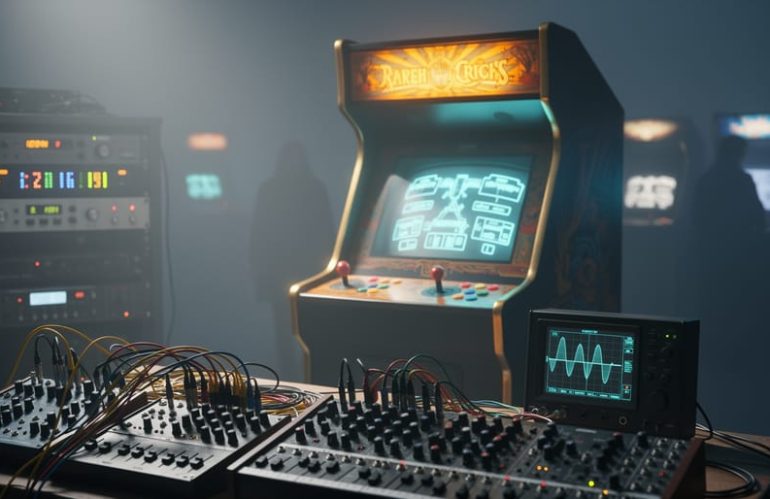
Yellow Magic Orchestra’s 1978 track “Computer Game” stands as one of the earliest recorded examples of electronic music explicitly designed to evoke the aesthetic and sonic texture of video arcade culture. For game developers and tech professionals today, YMO’s pioneering synthesis work offers more than historical curiosity: it reveals how the reciprocal relationship between music technology and interactive entertainment has shaped modern game audio pipelines, particularly in Unity-based multiplayer development where adaptive soundscapes drive player engagement.
The Tokyo-based trio of Haruomi Hosono, Ryuichi Sakamoto, and Yukihiko Takahashi sampled and synthesized arcade machine sounds at a time when most game audio consisted of simple square-wave beeps. Their production techniques anticipated core principles of modern game sound design: procedural generation, layered loops, and reactive audio cues that respond to player action. This wasn’t background music for games; it was a musical thesis on the computer as both instrument and collaborator.
Understanding YMO’s approach becomes practical when building mid-core multiplayer experiences. The group’s modular composition style, where discrete musical fragments combine dynamically, mirrors contemporary implementation strategies for adaptive music systems. Their workflow treated technological constraints as creative parameters rather than limitations, a mindset that remains essential for teams balancing artistic vision with performance budgets across platforms.
This exploration examines what YMO Computer Games represents as both cultural artifact and technical blueprint, detailing the specific techniques that translate into actionable strategies for modern developers working at the intersection of electronic composition and interactive systems.
What YMO Computer Games Is
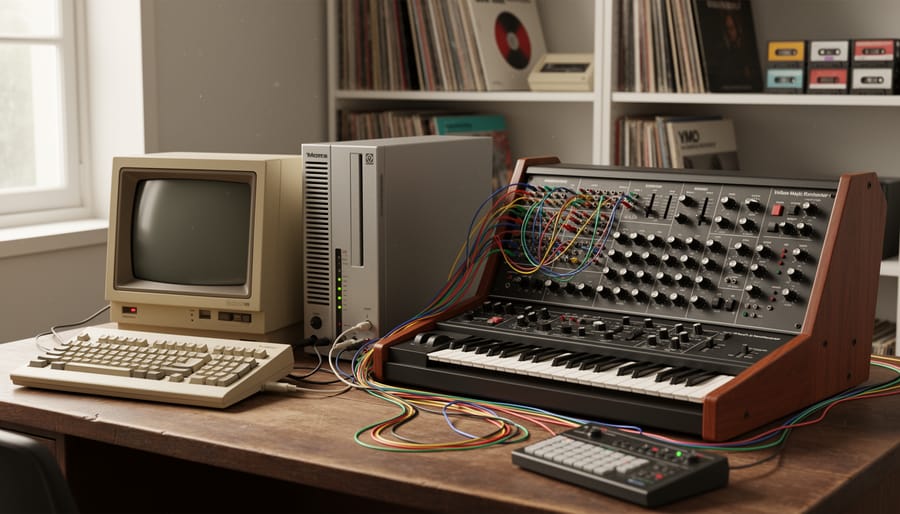
YMO Computer Games isn’t a software studio or a gaming company in the conventional sense. It refers to Yellow Magic Orchestra’s groundbreaking 1978 album “Computer Game” (released as “Yellow Magic Orchestra” in Japan), which established a sonic blueprint that would shape video game music for decades. The Japanese electronic trio, Haruomi Hosono, Ryuichi Sakamoto, and Yukihiro Takahashi, created an album that wasn’t just about games; it embodied the aesthetic and technological spirit of early computing and arcade culture through its use of synthesizers, sequencers, and digital production techniques that were revolutionary for their time.
The album’s significance extends beyond its historical moment. Tracks like “Computer Game (Theme from The Circus)” sampled Martin Denny’s exotica and layered it with synthesized bleeps and arpeggiated patterns that mirrored the sound chips of early arcade machines. This fusion created what many consider the first mainstream example of YMO’s DNA of game music a template that composers would reference when crafting soundtracks for titles ranging from 1980s coin-ops to modern indie games.
For contemporary game developers, YMO’s work demonstrates how technical constraints can drive creative innovation rather than limit it. The trio worked with early synthesizers like the Roland MC-8 Microcomposer and Moog modular systems, much as today’s developers work within polygon budgets, network latency considerations, and platform-specific audio limitations. Their approach to sound design, treating electronic instruments as tools for both musical expression and technological experimentation, mirrors the iterative, adaptive development philosophy that defines successful multiplayer game creation. Understanding this legacy provides context for why certain audio design choices resonate with players and how historical innovation informs current practice.
What They Created: YMO’s Gaming and Technology Innovations
The Technology Behind the Music
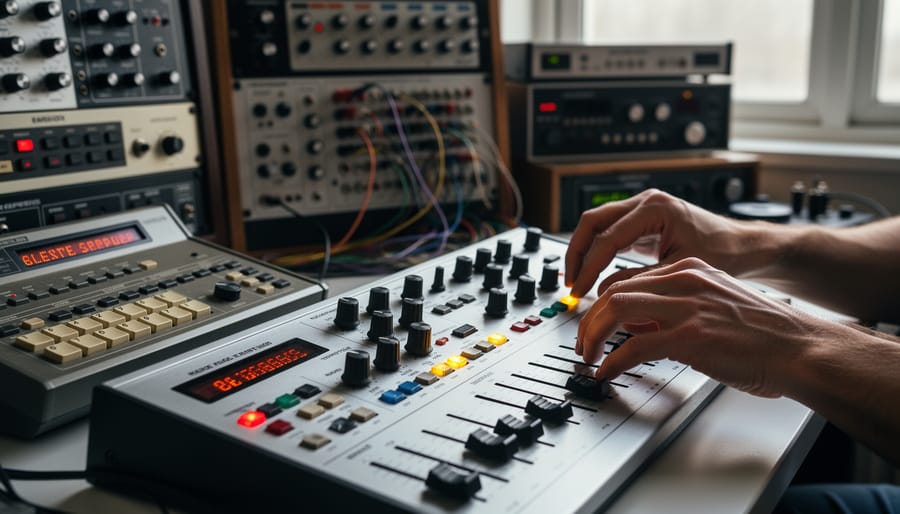
Yellow Magic Orchestra built their revolutionary sound on cutting-edge hardware that was experimental in 1978. The Roland MC-8 Microcomposer became their secret weapon, a microprocessor-based sequencer that let them program complex patterns with precision impossible through manual performance. Ryuichi Sakamoto, Haruomi Hosono, and Yukihiro Takahashi layered sounds from the Korg PS-3100 polyphonic synthesizer, Prophet-5, and Minimoog, creating textures that felt simultaneously organic and machine-made.
What made their approach genuinely innovative wasn’t just owning expensive gear. They treated these tools as collaborative partners in the creative process, constantly experimenting with parameter adjustments and programming variations until they achieved sounds that felt right. This iterative workflow mirrors how modern game developers use Unity: the tool provides immense capability, but the magic emerges through repeated testing, refinement, and willingness to pivot when something isn’t working.
The MC-8’s limitations, storing only 5,300 notes in its memory, forced YMO to think strategically about every sequence. They couldn’t program everything at once, so they planned modular sections they could combine and modify during recording sessions. Game developers face similar constraints with performance budgets, memory allocation, and processing power. Both disciplines demand adaptive planning: setting a clear vision while remaining flexible enough to adjust when technical realities or creative discoveries demand it.
YMO’s production philosophy emphasized preparation balanced with spontaneity, a mindset that serves multiplayer game development well.
Gaming Themes and Cultural Impact
Yellow Magic Orchestra’s 1978 album “Computer Game” (titled “Yellow Magic Orchestra” in some regions) arrived at a pivotal moment when arcade games were transitioning from simple bleeps to more sophisticated soundscapes. The album’s tracks, particularly “Computer Game” and “Firecracker”, didn’t just reference gaming aesthetics; they embodied the mechanical precision and playful energy of early video games while pushing far beyond the technical limitations arcade machines faced.
YMO’s influence on game soundtracks became evident throughout the 1980s as composers gained access to better hardware. The crisp, layered synth arrangements and robotic vocal processing that defined YMO’s sound provided a blueprint for what game music could achieve. Their work demonstrated that electronic music could convey emotion, atmosphere, and narrative, concepts that transformed how developers approached audio design in games beyond simple functional cues.
The chiptune movement owes considerable debt to YMO’s pioneering work. While chiptune artists worked within the constraints of sound chips, they drew inspiration from YMO’s ability to create compelling music with limited timbral palettes. The band’s emphasis on melody, rhythm, and texture over harmonic complexity resonated with a generation of game composers who had to maximize impact within severe memory and processing constraints.
Today’s game developers working on mid-core multiplayer experiences inherit this legacy. The principle that technological constraints can drive creative innovation, central to both YMO’s work and early game audio, remains relevant for teams balancing performance optimization with rich audio environments in Unity-based projects.
Who YMO Computer Games Is For
Yellow Magic Orchestra’s gaming legacy speaks to several distinct professional groups, each discovering unique value in their pioneering work. The audiences who benefit most from understanding YMO’s contributions share a common thread: they recognize that innovation in one technological domain often illuminates paths forward in another.
| Audience Type | Primary Interest in YMO | Application to Game Development |
|---|---|---|
| Game Audio Designers | Early synthesis techniques and adaptive composition methods | Creating dynamic soundscapes that respond to player actions in multiplayer environments |
| Unity Developers | Technical innovation mindset and experimental approach to new tools | Applying creative problem-solving to engine limitations and optimization challenges |
| Mid-Core Game Teams | Balancing accessibility with technical sophistication | Designing audio systems that enhance engagement without overwhelming players |
| Tech Historians & Enthusiasts | Understanding the evolution of digital creativity and gaming culture | Contextualizing current development practices within broader technological history |
Game developers working on multiplayer experiences gain particular insight from YMO’s collaborative approach. The trio’s method of integrating individual creativity within a cohesive technological framework mirrors how modern development teams coordinate audio, visual, and gameplay systems. Sound designers studying YMO’s production discover practical techniques for generating compelling audio with limited resources, a skill directly applicable to optimizing game performance across different hardware configurations.
Tech professionals exploring the intersection of music and gaming culture find that YMO’s work provides concrete examples of how experimental approaches to technology create lasting impact. Their willingness to push synthesizer capabilities beyond intended use parallels how innovative game developers extend Unity’s functionality through creative asset implementation and custom scripting solutions.
How to Engage with YMO’s Gaming Legacy

Resources and Where to Start
Start with Computer Game (1978) and Technodelphi (1979) for foundational YMO recordings, tracks like “Firecracker” and “Rydeen” demonstrate their synthesis techniques directly. The Solid State Survivor album (1979) showcases their most game-influenced work.
For documentation, seek out interviews with Ryuichi Sakamoto and Haruomi Hosono from the late 1970s and early 1980s, available through music journalism archives and documentary footage. These reveal their production philosophy and equipment choices.
Online communities worth exploring include the Chiptune subreddit, KVR Audio forums, and Lines community (), where sound designers regularly discuss YMO’s techniques alongside modern game audio implementation. The Game Audio Network Guild maintains resources connecting historical electronic music innovation to current development practices.
Developers integrating this knowledge into their educational content workflow can reference YMO’s adaptive approach to technology, treating new tools as creative partners rather than limitations. Teams who build educational games find particular value in YMO’s ability to make complex electronic concepts accessible and engaging, a principle that translates directly to interactive learning experiences.
Applying YMO’s Innovation Philosophy to Modern Game Development
YMO’s willingness to experiment with untested technology mirrors the ethos driving modern Unity development. When Yellow Magic Orchestra chose unproven synthesizers and digital sequencers in 1978, they embraced uncertainty, the same mindset required when building mid-core multiplayer games today. Their iterative approach to sound creation, layering experimental textures until they discovered something compelling, parallels the rapid prototyping cycles that define successful game studios.
At Moore Games Company, this experimental spirit manifests through adaptive planning frameworks that treat development as an evolving conversation rather than a fixed blueprint. Just as YMO refined tracks through live performance and studio revision, effective multiplayer development demands constant testing, player feedback integration, and mechanical refinement. The Moore Games core principles of continuous improvement and collaborative innovation directly echo YMO’s studio methodology, both reject rigid adherence to initial plans in favor of responsive creativity.
YMO’s collaborative structure offers another lesson. The trio combined Ryuichi Sakamoto’s classical training, Haruomi Hosono’s pop sensibility, and Yukihiro Takahashi’s rhythmic precision, creating work none could achieve alone. Modern multiplayer development thrives on similar cross-disciplinary teams. A 2-team setup leveraging specialized Unity developers, sound designers, and gameplay architects mirrors YMO’s approach, diverse expertise converging toward unified vision.
The technological constraints YMO faced forced creative problem-solving. Limited polyphony meant every note mattered; primitive sequencers demanded clever workarounds. Today’s multiplayer developers face different constraints, network latency, platform limitations, performance budgets, but the response remains identical: turn restrictions into creative catalysts. YMO proved that innovation emerges not despite technological boundaries but through imaginative engagement with them, a philosophy essential for teams pushing Unity’s capabilities in competitive multiplayer spaces.
What Ymo Computer Games Does
YMO Computer Games operates as a cultural and educational initiative preserving and promoting Yellow Magic Orchestra’s contributions to electronic music and gaming culture. The organization curates digital archives of YMO’s computer game-themed recordings, making rare tracks and production notes accessible to modern developers and researchers. They maintain partnerships with music licensing platforms, enabling game studios to incorporate YMO’s pioneering electronic compositions into contemporary titles while ensuring proper attribution and royalty distribution.
The initiative runs workshops and online courses teaching YMO’s synthesis techniques and compositional approaches, helping sound designers understand how early electronic pioneers crafted memorable game audio with limited technology. These programs demonstrate how constraints drove innovation, a lesson applicable to modern development challenges. Their educational materials connect vintage production methods to current tools, showing developers how to achieve authentic retro aesthetics or apply YMO’s experimental mindset to creating engaging player rewards systems and audio feedback loops. The organization also collaborates with music museums and gaming exhibitions, creating interactive displays where visitors experience YMO’s technology firsthand alongside modern game development equipment, illustrating the evolution from analog synthesizers to digital audio workstations.
Frequently Asked Questions About YMO Computer Games
Game developers and tech enthusiasts frequently ask how Yellow Magic Orchestra’s work connects to contemporary game development and what practical value their legacy offers today. These questions reflect the growing recognition that understanding the roots of electronic sound design and experimental music production can inform modern audio implementation and creative workflows.
Did Yellow Magic Orchestra actually create video games?
No, YMO didn’t develop video games themselves. Their 1978 album “Computer Game” and subsequent work explored gaming themes through music, creating soundscapes that influenced how developers and composers approached game audio design in the emerging electronic entertainment industry.
How does YMO’s work remain relevant to Unity developers today?
YMO pioneered techniques for creating memorable, constraint-based electronic compositions using limited technology, which mirrors the optimization challenges Unity developers face when implementing adaptive audio systems across multiple platforms. Their experimental approach to sequencing and synthesis informs modern dynamic music systems in games.
Where can developers study YMO’s production techniques?
Start with their albums “Yellow Magic Orchestra” (1978) and “Computer Game” (1978), then explore archival interviews and documentary footage available through music libraries and streaming platforms. Technical breakdowns of their equipment and methods appear in electronic music production forums and academic studies of early synthesizer use.
What specific aspects of YMO’s legacy apply to multiplayer game development?
Their emphasis on tight collaboration between musicians with distinct specializations parallels the team dynamics essential for successful multiplayer projects. Additionally, their innovative use of sequencers for creating interlocking patterns relates directly to implementing responsive, layered audio that adapts to player actions in real-time multiplayer environments.
The practical application extends beyond pure audio design. YMO’s willingness to experiment with emerging technology, iterate rapidly, and combine Eastern and Western influences offers a blueprint for culturally diverse development teams working on Unity-based multiplayer experiences. Their constraint-driven creativity, working within the technical limitations of 1970s synthesizers and sequencers, teaches valuable lessons about innovation under resource constraints that remain relevant for indie studios and established development houses alike.
Yellow Magic Orchestra’s pioneering work in electronic music and gaming culture demonstrates a truth that remains vital for modern development teams: innovation emerges when creative vision meets technological possibility. Their 1978 experiments with synthesizers, sequencers, and computer game themes weren’t just musical achievements, they established a blueprint for adaptive, technology-driven creativity that resonates today.
Moore Games Company embraces this same spirit. Understanding how early innovators pushed boundaries with limited tools informs how we approach Unity-based multiplayer development. YMO worked collaboratively, experimenting fearlessly, and building something genuinely new from emerging technology. We apply that philosophy to every project, combining adaptive planning with continuous improvement to deliver mid-core multiplayer experiences that push creative and technical limits.
The connection matters because gaming history isn’t nostalgia, it’s practical wisdom. Developers who study how pioneers like YMO solved problems with novel tools bring richer perspectives to collaborative projects. That historical awareness strengthens client relationships, sharpens technical decisions, and ultimately produces better games. YMO showed that technological constraints spark creativity rather than limiting it, a lesson that transforms how we build, iterate, and innovate together.